By DREDGING.app | Connecting the Global Dredging Industry
The world’s ports, waterways, coastlines and offshore energy infrastructure depend on one essential industry: dredging. From keeping international shipping routes navigable to creating new land, protecting vulnerable coastlines and supporting offshore wind development, dredging is a cornerstone of modern maritime infrastructure.
As global trade evolves and investment in marine infrastructure accelerates, the dredging industry is entering a new era—one defined by advanced equipment, digital technology, operational efficiency and increasing environmental responsibility.
According to Dimension Market Research, the global dredging market is projected to grow from RFQ in 2025 to RFQ by 2034, representing a compound annual growth rate (CAGR) of 3.2%.
For dredging contractors, equipment manufacturers, marine engineering companies, project developers and industry professionals, this outlook highlights the importance of staying informed, building strong industry connections and embracing new technologies.
At DREDGING.app, we believe that better access to industry knowledge, services, equipment and professional connections can help the global dredging community navigate this changing landscape.
The Global Dredging Market: An Industry With Growing Importance
Dredging is much more than the removal of underwater sediment. It is a fundamental activity that enables maritime commerce, infrastructure development, coastal management and offshore construction.
By removing, relocating or managing sand, soil, sediment and other underwater materials, dredging operations help maintain water depths, expand ports, restore waterways and prepare seabeds for major infrastructure projects.
Today, dredging plays a critical role in several interconnected industries:
- Ports and shipping: Maintaining navigable channels, harbor basins and berths for commercial vessels.
- Marine construction: Preparing seabeds and waterways for infrastructure development.
- Land reclamation: Creating land for residential, commercial, industrial and public infrastructure.
- Coastal protection: Supporting shoreline management, flood mitigation and coastal resilience.
- Offshore energy: Enabling seabed preparation and subsea cable installation for offshore wind and other energy projects.
- Environmental restoration: Managing contaminated sediments and supporting the rehabilitation of aquatic environments.
As these applications expand, the demand for specialized dredging equipment, skilled operators, engineering expertise and efficient project execution is expected to remain significant.
The supplied source text states that annual dredging volumes exceed 20 billion cubic metres. This volume claim could not be corroborated on the public report page and should be treated as unverified.
For the industry, the opportunity is not simply to dredge more. It is to deliver projects more efficiently, sustainably and intelligently.
Dredging Market Outlook: Key Figures at a Glance
The global market is expected to experience steady growth through 2034, supported by investments in maritime trade, infrastructure modernization, coastal development and offshore energy.
| Market indicator | Reported estimate |
|---|---|
| Global market size, 2025 | RFQ |
| Projected global market, 2034 | RFQ |
| Forecast CAGR, 2025–2034 | 3.2% |
| U.S. market size, 2025 | RFQ |
| Projected U.S. market, 2034 | RFQ |
| North American share, 2025 | 38.6% |
Source: Dimension Market Research, Dredging Market analysis. Forecasts are attributed to the report, not independent research by DREDGING.app. The supplied North American share and annual dredging-volume claims could not be corroborated on the public report page.
The U.S. market is projected to grow at a CAGR of approximately 3.0%, supported by port modernization, coastal protection, environmental restoration and offshore energy development.
Although forecasts indicate steady rather than explosive growth, the market encompasses a broad range of opportunities. The ability to identify suitable projects, access reliable equipment and expertise, and respond to changing technical requirements will remain important competitive factors.
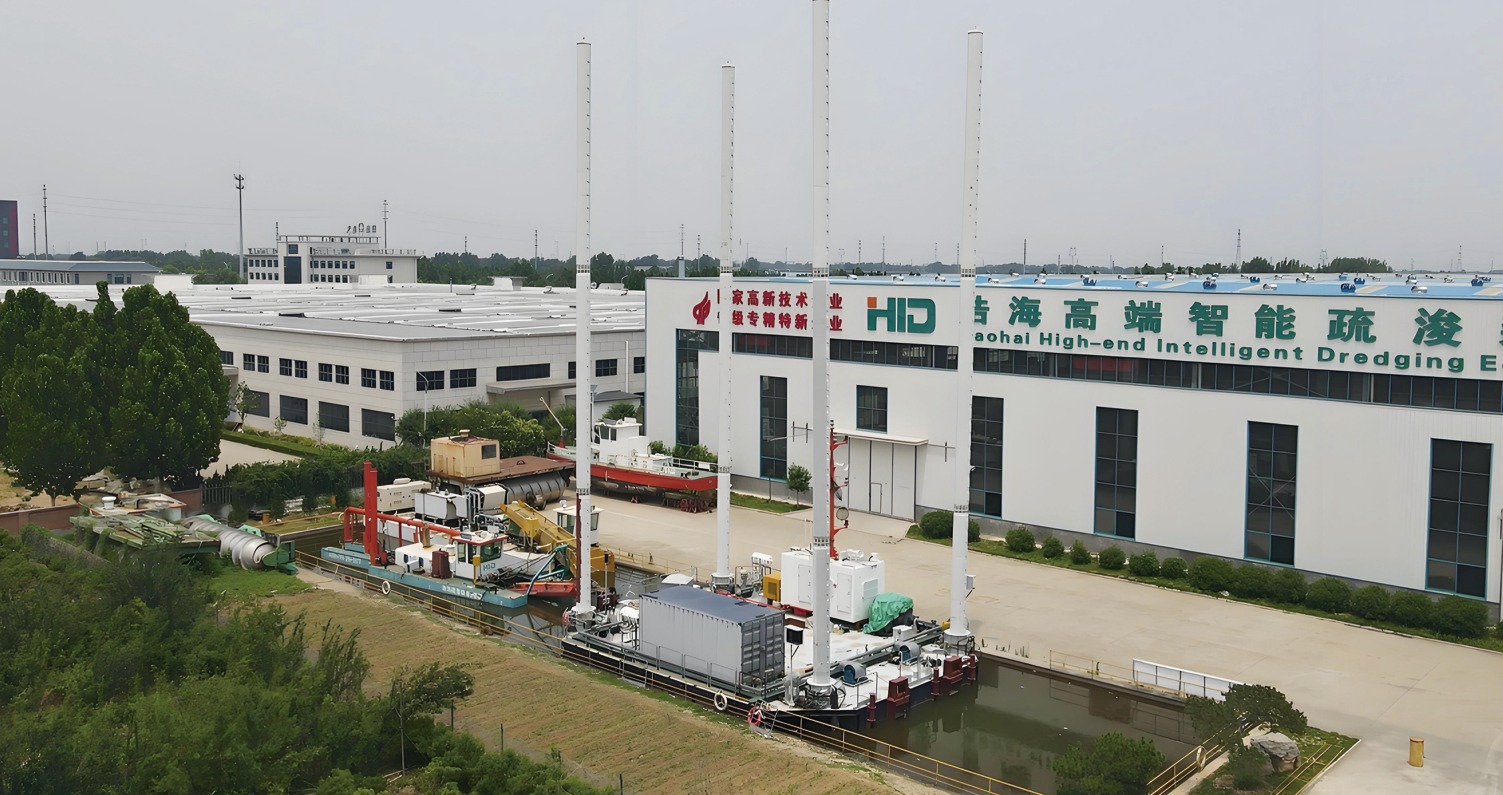
Five Major Forces Driving Dredging Industry Growth
1. Port Expansion and the Growth of Maritime Trade
International shipping remains a major driver of dredging demand.
Ports must continually adapt to changing vessel sizes, cargo volumes, shipping routes and logistical requirements. Larger vessels and evolving trade patterns can require deeper navigation channels, expanded harbor basins and upgraded berthing facilities.
Dredging enables port authorities and marine contractors to maintain navigable depths and develop the infrastructure needed to accommodate modern shipping operations.
At the same time, investments in emerging markets are creating opportunities for new port construction, inland waterway development and the modernization of existing maritime facilities.
The opportunity: Contractors, equipment suppliers and marine engineering specialists can benefit from projects involving channel deepening, port expansion, maintenance dredging and harbor development.
For the wider industry, efficient project delivery and access to suitable equipment and technical expertise are increasingly important.
2. Urban Development and Land Reclamation
Coastal cities face growing demands for residential areas, commercial districts, industrial facilities and transport infrastructure. In regions where available land is limited, land reclamation can form part of long-term development strategies.
Dredging supports these projects by removing and managing seabed materials and, where technically and environmentally suitable, supplying material for reclamation.
Beyond urban expansion, dredging also contributes to coastal resilience through channel management, sediment redistribution and projects associated with flood protection.
However, reclamation and coastal development require careful planning, appropriate material management and environmental assessment.
The opportunity: Large-scale waterfront developments and infrastructure projects can create demand for dredging fleets, hydraulic transport systems, marine construction services and specialized engineering capabilities.
3. Offshore Wind and Energy Infrastructure
The expansion of offshore renewable energy is opening additional opportunities for the dredging and marine construction sectors.
Offshore wind developments can require seabed preparation, foundation-related works, cable trenching and other subsea construction activities. The precise requirements depend on the project design, seabed conditions and installation method.
Oil and gas infrastructure also continues to require specialized marine works associated with pipelines, platforms, terminals and subsea installations.
As offshore projects become more technically demanding, contractors need appropriate equipment, accurate seabed information and effective coordination between engineering and construction teams.
The opportunity: Companies with the necessary marine capabilities, specialist equipment and offshore project experience can position themselves to participate in this evolving infrastructure market.
4. Coastal Protection and Climate Resilience
Coastal communities and infrastructure are increasingly exposed to flooding, erosion and changing environmental conditions.
Dredging can support coastal management initiatives through sediment placement, channel maintenance and other carefully designed interventions. It may also form part of wider flood mitigation and shoreline protection programs.
The effectiveness of these projects depends on local coastal processes, environmental conditions and long-term management strategies. Dredging is one component of a broader approach to resilience, rather than a standalone solution for every coastal challenge.
The opportunity: Government agencies, municipalities, engineering consultants and marine contractors can collaborate on projects that combine waterway management, sediment planning and coastal infrastructure.
5. Environmental Restoration and Sediment Management
Environmental performance is becoming an increasingly important consideration in dredging project design and execution.
Some projects involve the removal or management of contaminated sediment, the restoration of waterways or measures intended to minimize disturbance to aquatic habitats.
These activities require careful characterization of sediment, appropriate handling and disposal or reuse strategies, and monitoring throughout the project lifecycle.
The opportunity: Specialized contractors and technology providers can contribute through sediment assessment, controlled dredging techniques, environmental monitoring and responsible material management.
For the industry as a whole, environmental performance is increasingly connected to project planning, regulatory compliance and long-term operational efficiency.
The Next Evolution: Digital Dredging and Smarter Operations
Technology is changing how dredging projects are planned, monitored and executed.
While equipment capability remains essential, digital tools can provide additional visibility into operations, help identify inefficiencies and support more informed decision-making.
GPS-Guided Dredging and Real-Time Monitoring
Positioning systems, sensors and real-time data acquisition can help operators monitor dredging progress and improve excavation accuracy.
When integrated effectively, these technologies can support better control over dredging depth, production data, vessel positioning and project execution.
The result can be improved operational visibility and more informed coordination between project teams.
Automation and Artificial Intelligence
Automation and artificial intelligence are creating new possibilities for equipment monitoring, production analysis and maintenance planning.
Potential applications include identifying performance patterns, supporting predictive maintenance and helping operators optimize equipment utilization.
These technologies do not eliminate the need for experienced personnel. Their value lies in helping professionals make better decisions using more timely and relevant information.
Digital Twins and Project Simulation
Digital twins and simulation tools can help teams represent project conditions digitally, evaluate scenarios and assess potential operational risks before work begins.
Depending on data quality and system integration, these tools can support planning, coordination and performance analysis across complex marine projects.
What This Means for the Dredging Industry
The next competitive advantage may come from combining capable equipment with better information, improved coordination and effective project management.
For contractors, this means evaluating how digital tools fit into existing workflows. For equipment manufacturers and service providers, it creates opportunities to develop solutions that address real operational challenges.
For the wider dredging community, accessible industry information and stronger professional connections can make it easier to discover relevant expertise and emerging opportunities.
This is where DREDGING.app aims to support a more connected and informed dredging industry.
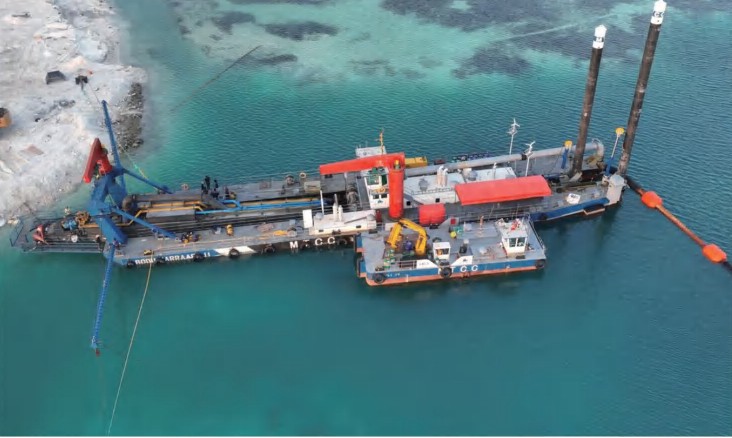
Dredging Equipment: Matching the Technology to the Project
No single dredger is suitable for every operation. Equipment selection depends on sediment characteristics, water depth, required production, site conditions, environmental constraints and project logistics.
The global dredging market includes several major equipment categories.
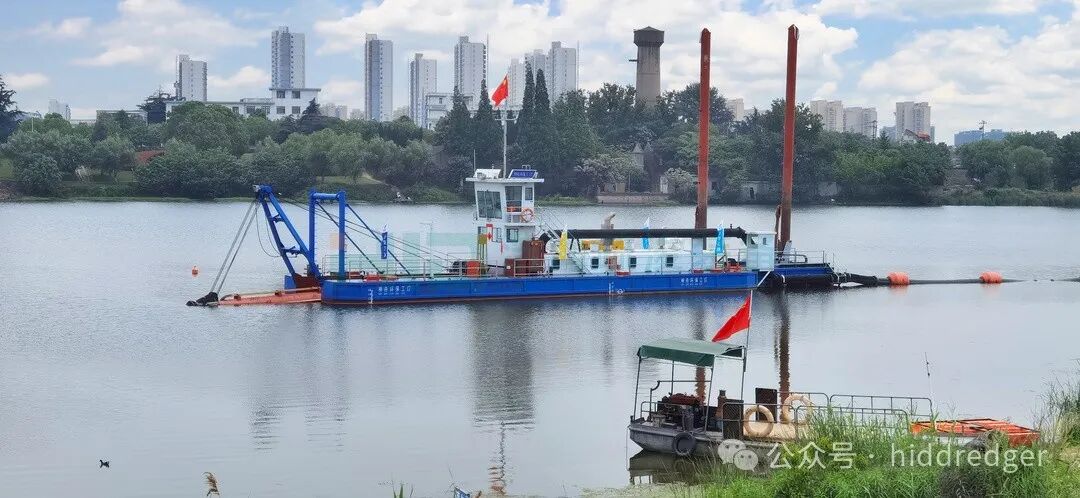
Cutter Suction Dredgers (CSDs)
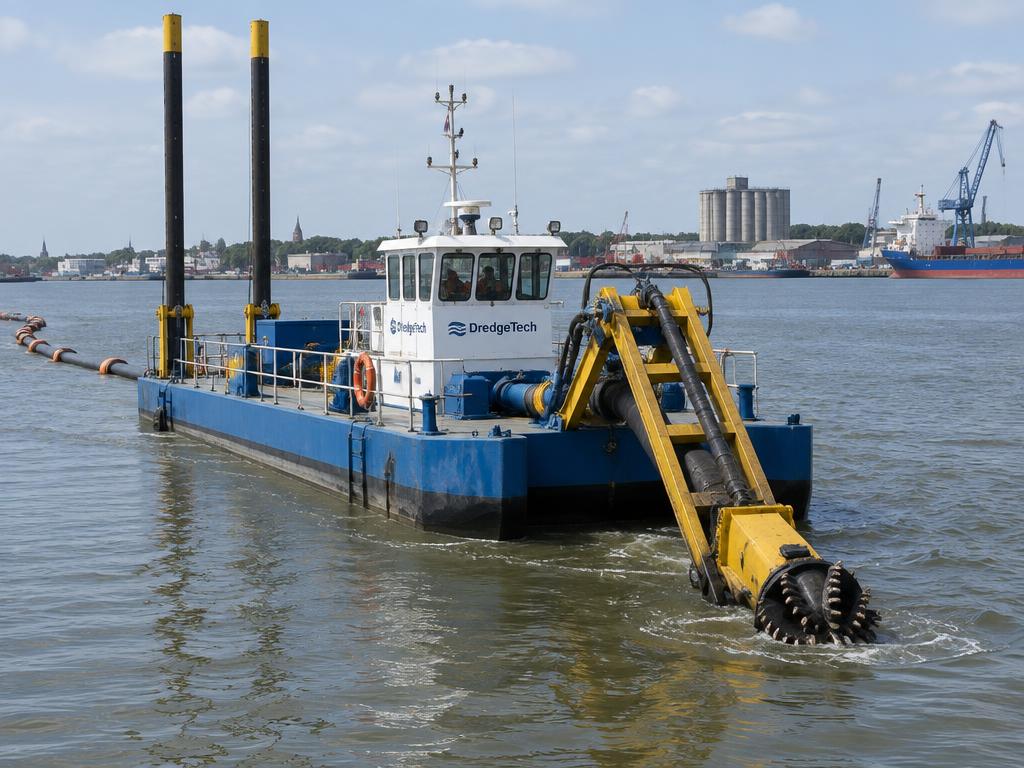
Cutter suction dredgers use a rotating cutter head to loosen material before it is transported through a suction and pumping system.
They are used in applications including port deepening, land reclamation, river dredging and projects involving compact or harder materials, depending on equipment configuration and ground conditions.
Dimension Market Research projects cutter suction dredgers to hold the leading position in the equipment segment.
Trailing Suction Hopper Dredgers (TSHDs)
Trailing suction hopper dredgers collect sediment through dragheads while moving along a dredging area. Material is stored in an onboard hopper before being transported and discharged or placed according to the project requirements.
They are widely associated with navigation-channel maintenance, port approaches and other marine dredging applications.
Backhoe Dredgers
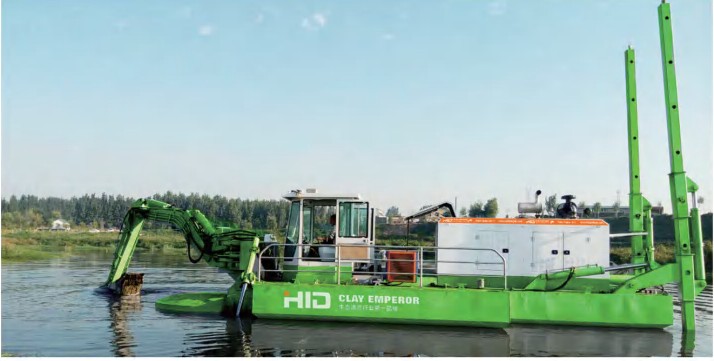
Backhoe dredgers use excavator-style equipment to remove material from the seabed. They can be suitable for localized excavation, harbor works and projects that require controlled removal of particular materials.
Bucket Dredgers
Bucket dredgers use mechanical buckets to excavate and lift sediment. Their suitability depends on the material, project design and required handling method.
Grab Dredgers
Grab dredgers use a clamshell-style grab to remove sediment, often in confined areas or locations where controlled mechanical excavation is required.
Auger Dredgers
Auger dredgers use a rotating auger mechanism to loosen and remove material. They may be selected for specialized applications where their configuration suits the sediment and operating conditions.
Other equipment types and specialized dredging systems also serve particular project requirements.
For contractors and project owners, the right equipment choice is about more than capacity. Reliability, availability, mobilization, maintenance, fuel consumption, operator expertise and environmental requirements all influence project performance.
Where Is the Global Dredging Market Growing?
Regional demand reflects differences in trade activity, infrastructure investment, coastal development and energy policy.
North America: A Major Market for Port and Coastal Infrastructure
Dimension Market Research estimates that North America accounted for approximately 38.6% of global dredging market revenue in 2025.
The United States is an important contributor, supported by its extensive coastline, major commercial ports and continuing needs for navigation-channel maintenance and infrastructure modernization.
Coastal protection, environmental restoration and offshore energy projects also contribute to demand.
For market participants, North America offers opportunities across maintenance dredging, port development, marine construction and specialized environmental projects.
Asia-Pacific: Infrastructure, Trade and Urban Development
Asia-Pacific presents substantial opportunities linked to industrialization, expanding trade networks, port development and coastal urbanization.
China, India, Indonesia and other economies continue to invest in infrastructure intended to support transportation, logistics and economic development.
Land reclamation, waterway modernization and new maritime facilities can create demand for dredging equipment and services.
The region's diversity means that project requirements, regulatory frameworks and commercial conditions vary significantly between markets.
Europe: Offshore Renewables and Sustainable Marine Infrastructure
Europe's dredging industry is supported by established port networks, maritime trade, environmental management and coastal infrastructure requirements.
Offshore renewable energy is another important area, particularly where projects require seabed preparation and subsea cable installation.
Environmental standards and technical requirements can be demanding, placing importance on careful project planning, operational control and responsible sediment management.
Middle East and Africa: Port Development and Coastal Investment
Infrastructure investment, port expansion, waterfront development and energy-related construction support opportunities across the Middle East and Africa.
Large-scale coastal developments and land reclamation projects can also require substantial dredging capacity and marine engineering expertise.
Market participants must account for local project conditions, procurement processes, logistics, regulatory requirements and equipment mobilization when evaluating opportunities.
Who Are the Major Players in the Dredging Industry?
The dredging market includes international marine contractors, specialized dredging companies, construction groups and operators serving regional markets.
Companies identified in Dimension Market Research's analysis include:
- Jan De Nul Group
- Royal Boskalis Westminster N.V.
- DEME Group
- Great Lakes Dredge & Dock Corporation
- China Communications Construction Company (CCCC)
- Hyundai Engineering & Construction Co., Ltd.
- Penta-Ocean Construction Co., Ltd.
- Van Oord
- TOA Corporation
- Weeks Marine, Inc.
- National Marine Dredging Company (NMDC)
- Boskalis Hirdes
- Gulf Cobla
These companies operate in different market segments and geographic regions. Their capabilities and project portfolios vary, so the list should not be interpreted as a ranking.
Competition in the industry is influenced by fleet capacity, engineering expertise, project delivery, equipment utilization, technological capabilities, environmental performance and access to specialized personnel.
As projects become more complex, the ability to coordinate equipment, people, information and services effectively remains a key consideration.
The Biggest Opportunities for Dredging Companies
The market outlook points to several areas worth monitoring as companies plan their next investments and business development strategies.
Offshore wind infrastructure: Seabed preparation and subsea cable-related works associated with offshore renewable energy.
Port modernization: Navigation-channel deepening, harbor maintenance and infrastructure expansion.
Coastal resilience: Dredging and sediment management associated with flood mitigation and shoreline projects.
Land reclamation: Marine construction and waterfront development where suitable and environmentally approved.
Environmental remediation: Specialized work involving contaminated sediment and waterway restoration.
Inland waterways: Maintenance and modernization of rivers, channels and other navigable routes.
Digital transformation: Technologies that improve project visibility, equipment monitoring and operational planning.
Sustainable equipment and operations: Solutions that help reduce emissions, manage sediment dispersion and meet project-specific environmental requirements.
For companies evaluating these opportunities, success depends on more than identifying market growth. It also requires understanding customer requirements, assessing commercial viability, maintaining appropriate equipment and building reliable relationships across the project supply chain.
The Challenges Behind Market Growth
Despite its importance, dredging remains a technically demanding and capital-intensive industry.
Environmental Compliance
Projects may require environmental assessments, sediment testing, permits, monitoring and specialized handling procedures.
Requirements can be particularly complex in sensitive coastal areas, estuaries, wetlands and other protected environments. Delays and additional costs may arise when project conditions or regulatory requirements change.
High Capital and Operating Costs
Dredging equipment, support vessels, barges, pumping systems, maintenance, fuel and skilled personnel require substantial investment.
Equipment utilization and project scheduling are therefore important considerations when assessing the commercial performance of a dredging operation.
Technical and Site-Specific Risks
Sediment conditions, water depth, weather, currents, underwater obstacles and transport distances can all affect execution.
Accurate site information and realistic project planning are essential to managing these variables.
Geopolitical and Commercial Uncertainty
Infrastructure projects can be influenced by changes in public spending, procurement schedules, financing conditions and geopolitical developments.
Companies operating internationally must also account for local regulations, contracting arrangements and logistical constraints.
Workforce and Coordination Requirements
Dredging projects bring together equipment operators, marine engineers, surveyors, environmental specialists, project managers and other professionals.
Effective coordination between these groups is essential to maintaining safety, quality and productivity.
These challenges reinforce the value of informed planning, dependable partnerships and access to relevant industry knowledge.
How DREDGING.app Fits Into the Evolving Dredging Industry
As the dredging sector becomes more specialized and technology-driven, industry professionals need efficient ways to discover relevant information, identify potential partners and stay connected with developments across the market.
DREDGING.app is positioned around the needs of the dredging community—an industry where equipment, technical knowledge, marine services and professional relationships all play a role in getting projects delivered.
Whether you are a dredging contractor, equipment supplier, marine engineering specialist, project owner or industry professional, the broader goal is the same: make it easier to navigate an interconnected industry.
The opportunities for a digital industry platform include helping professionals:
- Discover relevant dredging companies, equipment and services.
- Improve visibility across the dredging and marine construction ecosystem.
- Identify potential business contacts and collaboration opportunities.
- Follow developments in equipment, technology and industry practices.
- Connect project requirements with relevant expertise and capabilities.
The exact services available through DREDGING.app should be assessed against the platform's current features. The wider industry opportunity, however, is clear: better access to relevant information and stronger connections can help reduce friction in a complex global market.
The future of dredging will depend not only on the equipment operating offshore, but also on how effectively the industry connects knowledge, people and opportunities.
The Future of Dredging: More Connected, Efficient and Sustainable
Looking toward 2034, the dredging market is expected to evolve at the intersection of maritime trade, infrastructure investment, offshore energy, environmental management and digital technology.
Port and waterway maintenance will remain central to the industry. Meanwhile, offshore renewable energy, coastal resilience and environmental restoration are creating additional areas of demand.
Technological advances may help operators improve precision, monitor equipment performance and make more informed decisions. At the same time, environmental requirements will continue to influence how projects are planned and delivered.
Companies that combine suitable equipment, strong technical capabilities, effective project management and responsible operating practices may be better positioned to compete as project requirements evolve.
For smaller contractors and specialized suppliers, understanding market developments and building the right industry relationships can be equally important.
At DREDGING.app, we see a global industry with significant expertise, essential infrastructure responsibilities and opportunities for greater collaboration.
The next chapter of dredging will be shaped by the companies that can adapt, innovate and work effectively across an increasingly connected marine ecosystem.
Connect With the Dredging Industry
The global dredging industry is evolving. Stay informed, explore opportunities and strengthen your connections with DREDGING.app.
Whether your focus is dredging equipment, marine construction, port infrastructure, offshore energy, environmental services or industry development, staying connected can help you navigate a changing market.
Visit DREDGING.app to explore the platform and discover how it can support your involvement in the dredging community.
Building connections. Supporting the industry. Moving dredging forward.
Frequently Asked Questions About the Dredging Market
How large is the global dredging market?
According to Dimension Market Research, the global dredging market was estimated at RFQ in 2025 and is projected to reach RFQ by 2034.
What is the expected growth rate of the dredging market?
Dimension Market Research projects a compound annual growth rate of 3.2% between 2025 and 2034.
Which region has the largest share of the dredging market?
North America is projected to account for approximately 38.6% of global market revenue in 2025, according to the cited market analysis.
Which dredging equipment types are commonly used?
Major equipment categories include cutter suction dredgers, trailing suction hopper dredgers, backhoe dredgers, bucket dredgers, grab dredgers and auger dredgers. The appropriate type depends on project conditions and technical requirements.
What are the main applications of dredging?
Applications include port and harbor maintenance, navigation-channel deepening, land reclamation, coastal protection, offshore infrastructure, environmental remediation and flood mitigation.
How is technology changing dredging?
GPS-guided systems, sensors, real-time monitoring, automation, artificial intelligence and digital twins can support improved planning, equipment monitoring and operational decision-making.
What are the biggest opportunities in the dredging industry?
Key opportunities include port modernization, offshore wind development, coastal resilience, land reclamation, environmental restoration, inland waterway maintenance and digital dredging solutions.
What challenges do dredging companies face?
Major challenges include high capital and operating costs, environmental compliance, technical site conditions, project delays, regulatory uncertainty and the need for skilled personnel.
What is the role of DREDGING.app?
DREDGING.app aims to serve the dredging community through its digital industry platform. Visitors should consult the platform directly for its current features, services and participation opportunities.
Cross-reference
Products for this kind of work
 In stock